Indonesia Enacts Sweeping New Criminal Code Affecting Tourists and Foreign Visitors
The new legal framework replaces colonial-era law, introduces morality and speech-related offenses, and formally applies to foreigners traveling across the country, including Bali.
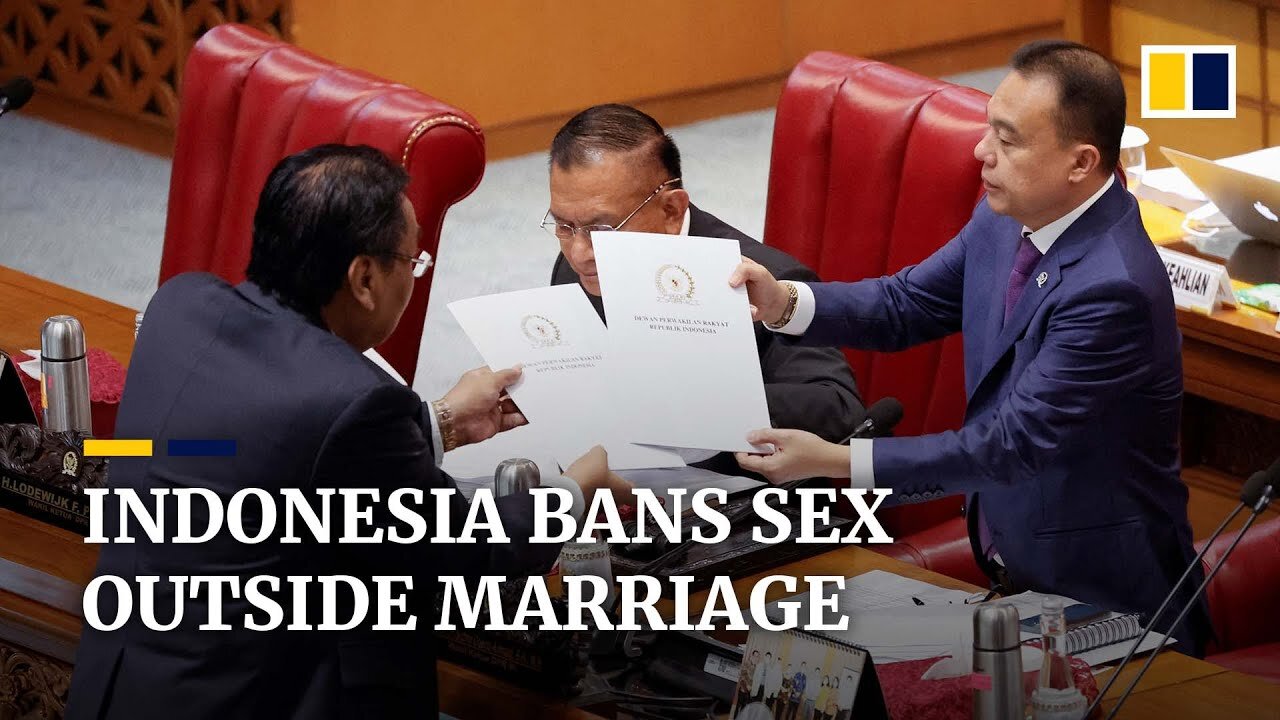
Indonesia has entered a new legal era with the enforcement of a comprehensive criminal code that replaces legislation dating back to Dutch colonial rule and introduces wide-ranging changes that also apply to foreign visitors.
The new criminal code, known as KUHP, runs more than three hundred pages and reshapes Indonesia’s approach to criminal law.
Among its most closely watched provisions are the criminalisation of sexual relations outside marriage, punishable by up to one year in prison, and cohabitation outside marriage, punishable by up to six months.
Authorities have stated that these offenses are not subject to proactive enforcement and that legal proceedings may begin only following a formal complaint by a spouse, parent, or child.
Despite these assurances, civil liberties groups have warned that the existence of such provisions creates legal uncertainty and may affect visitors’ sense of security.
The law explicitly applies to foreign nationals while they are in Indonesia, including popular destinations such as Bali.
The revised code also restores criminal offenses related to insulting the sitting president or vice president, state institutions, and the national ideology, with penalties of up to three years in prison.
Officials have said complaints must be formally filed and that clear distinctions are intended between legitimate criticism and criminal insult, though concerns remain about selective enforcement.
One notable change followed pressure from civil society groups, with lawmakers removing a provision that would have criminalised same-sex relations.
While this decision was welcomed by activists, they have cautioned that broader morality clauses and prevailing social attitudes may still affect members of the lesbian, gay, bisexual, and transgender community.
The new code expands existing blasphemy laws, maintaining prison sentences of up to five years for actions deemed to deviate from the teachings of Indonesia’s six officially recognised religions.
It also preserves penalties of up to ten years for organising Marxist-Leninist groups and four years for spreading communist ideology.
Capital punishment remains in place, but with a significant procedural change.
Death sentences will now include a ten-year probation period, after which they may be commuted to life imprisonment or a fixed-term sentence if the inmate demonstrates good behaviour.
The law continues to prohibit abortion, while reaffirming existing exceptions for life-threatening circumstances and pregnancies resulting from rape, provided the pregnancy is under twelve weeks.
At the same time, the code broadens the use of non-custodial penalties such as community service and supervision, giving judges greater discretion to tailor sentences and reduce prison overcrowding.
For decades, efforts to replace Indonesia’s colonial criminal law stalled amid disputes over human rights, religious norms, and local traditions.
A revised version of the code was delayed in two thousand nineteen after mass protests, before lawmakers completed work on the final draft in late two thousand twenty-two and approved it unanimously.
The law entered force after a three-year transition period.
For most travelers, the changes do not fundamentally alter daily life in Indonesia, but they underscore the importance of understanding local laws and social norms before visiting.
The new criminal code, known as KUHP, runs more than three hundred pages and reshapes Indonesia’s approach to criminal law.
Among its most closely watched provisions are the criminalisation of sexual relations outside marriage, punishable by up to one year in prison, and cohabitation outside marriage, punishable by up to six months.
Authorities have stated that these offenses are not subject to proactive enforcement and that legal proceedings may begin only following a formal complaint by a spouse, parent, or child.
Despite these assurances, civil liberties groups have warned that the existence of such provisions creates legal uncertainty and may affect visitors’ sense of security.
The law explicitly applies to foreign nationals while they are in Indonesia, including popular destinations such as Bali.
The revised code also restores criminal offenses related to insulting the sitting president or vice president, state institutions, and the national ideology, with penalties of up to three years in prison.
Officials have said complaints must be formally filed and that clear distinctions are intended between legitimate criticism and criminal insult, though concerns remain about selective enforcement.
One notable change followed pressure from civil society groups, with lawmakers removing a provision that would have criminalised same-sex relations.
While this decision was welcomed by activists, they have cautioned that broader morality clauses and prevailing social attitudes may still affect members of the lesbian, gay, bisexual, and transgender community.
The new code expands existing blasphemy laws, maintaining prison sentences of up to five years for actions deemed to deviate from the teachings of Indonesia’s six officially recognised religions.
It also preserves penalties of up to ten years for organising Marxist-Leninist groups and four years for spreading communist ideology.
Capital punishment remains in place, but with a significant procedural change.
Death sentences will now include a ten-year probation period, after which they may be commuted to life imprisonment or a fixed-term sentence if the inmate demonstrates good behaviour.
The law continues to prohibit abortion, while reaffirming existing exceptions for life-threatening circumstances and pregnancies resulting from rape, provided the pregnancy is under twelve weeks.
At the same time, the code broadens the use of non-custodial penalties such as community service and supervision, giving judges greater discretion to tailor sentences and reduce prison overcrowding.
For decades, efforts to replace Indonesia’s colonial criminal law stalled amid disputes over human rights, religious norms, and local traditions.
A revised version of the code was delayed in two thousand nineteen after mass protests, before lawmakers completed work on the final draft in late two thousand twenty-two and approved it unanimously.
The law entered force after a three-year transition period.
For most travelers, the changes do not fundamentally alter daily life in Indonesia, but they underscore the importance of understanding local laws and social norms before visiting.